(Image source from: AFP)
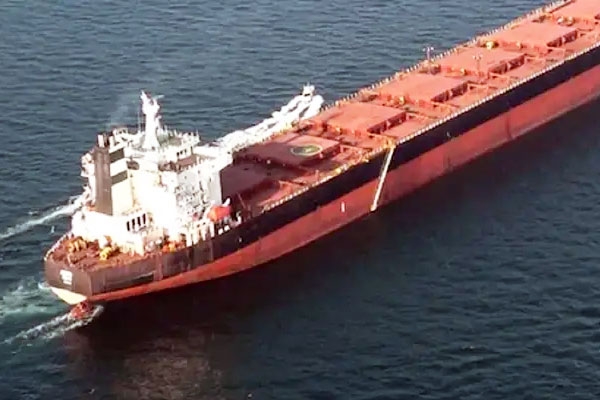
India and Iran might resume their oil relationship, even if just for a short time, this week during the conflict if a tanker carrying around 600,000 barrels of Iranian oil arrives at a port in Gujarat on April 4. The Ping Shun, flying the flag of Eswatini, is traveling from Iran's oil facilities on Kharg Island - which is reportedly a target of a US invasion in the ongoing war against Iran - to Vadinar. The identity of the buyer is unknown, but Vadinar hosts a significant refinery managed by Nayara Energy, which is supported by Russia. Additionally, this location serves as the distribution hub for sending crude oil to inland refineries, such as the one in Bina, Madhya Pradesh, operated by Bharat Petroleum Corporation Ltd, a government-owned company. However, it's important to be cautious. According to tracking data from market analysis company Kpler, Gujarat is listed as the destination, but this can change. Tankers associated with dark fleets, those transporting sanctioned oil, often declare one port and then switch to another en route to escape being detected. Regardless, this shipment is one of the few that Iran managed to bypass its blockade in the Strait of Hormuz - a vital route that accounted for 20-25 percent of the world’s crude oil before the conflict. If it does indeed arrive at Vadinar in Gujarat, it will mark the first purchase of Iranian crude by India since May 2019, when supplies were cut off due to US and western sanctions.
If India has acquired this shipment, it has done so thanks to Washington granting a 30-day waiver (which ends on April 19 and only applies to cargo that was loaded beforehand) from those sanctions due to global energy disruptions caused by the war against Iran. "The oil trade between India and Iran has started to gain momentum again… this is happening at a vital moment for Indian refiners who are facing limited inventories because of the disruptions in crude exports from Gulf countries due to the war," said Sumit Ritolia, an analyst at Kpler. Moreover, if this is confirmed, it emphasizes the relationship between Delhi and Tehran, especially now when Iran has very few allies in the world and requires financial support to recover and strengthen its military, as well as to restore damages from the war to its civilian and energy infrastructure. However, there is still no confirmation about how payments would be processed - assuming India is indeed the destination - since Iran is barred from using the global SWIFT banking system for transactions in dollars or euros. Before sanctions, Iran received payments in rupees; refineries would deposit money in an Indian bank that Iran uses to pay for imports from India, like food and medicine.
Before sanctions, particularly during the 2000s and 2010s, Iran was a key supplier of crude oil. Data from Reuters indicated that in 2008, Iran accounted for over 16 percent of India's crude oil imports, even though UN Security Council resolutions and US sanctions from 2006 were in place, which didn’t impose outright bans on oil exports. As international restrictions tightened, India's imports dropped to 7.3 percent by 2013. The nuclear agreement in 2015—known as the Joint Comprehensive Plan of Action, which involved the US, Iran, and several other nations during Barack Obama’s presidency—helped revive the crude trade between India and Iran. According to Reuters, in March 2016, New Delhi purchased around 500,000 barrels daily, and by 2017, Iran became India's third-largest crude supplier, with annual imports averaging 400,000 barrels per day. Purchases remained strong through 2018, with a peak of 705,000 barrels per day recorded in May that year. However, the situation began to deteriorate after the US left the JCPOA in 2018 during Donald Trump's administration. India secured a temporary waiver at that time, allowing them to reduce imports during the window of opportunity.
The last official delivery of Iranian crude occurred in April, just days prior. In the three months before that, from January to March, India purchased a substantial amount, about one million tons. After that point, officially there were no crude oil purchases from Iran. The waiver linked to the US-Iran conflict applies to Iranian oil that was already in transit. This is estimated to include 95 million barrels, with around 51 million expected to be sold to India, while the remainder may be exported to China or other Southeast Asian countries similarly affected by the conflict. Even with significant sanctions in place, Iranian crude still has a steady demand because its types—Light and Heavy—suit particular refinery setups, with the Heavy type being used by many of Asia’s oil refineries. This variety, ranging from ultra-light condensate to medium-heavy sour crude, is not easily found among other oil producers. The pricing from Iran is also a major reason for the continued interest in its oil.
Iranian crude generally trades at a price lower than the global benchmark Brent by about US$3 to US$9 a barrel, which has risen above US$100 since the conflict started. Additionally, with extraction costs as low as US$10 a barrel, the profit margins are quite significant.